Zero-Click Search: When Lost Clicks Are a Content Problem and When They Are Not
Diagnose zero-click traffic loss by separating SERP layout shifts from content gaps, indexation errors, and entity ambiguity without making unverified assumptions.

A sudden drop in organic referral traffic does not automatically prove that an AI answer engine stole your clicks, nor does it guarantee that rewriting your pages will recover them. To make sensible remediation decisions, website operators must evaluate whether search engine results page layout changes, crawling blocks, weak entity clarity, or genuine content deficiencies caused the decline before investing in editorial revisions.
Distinguishing search interface shifts from content performance
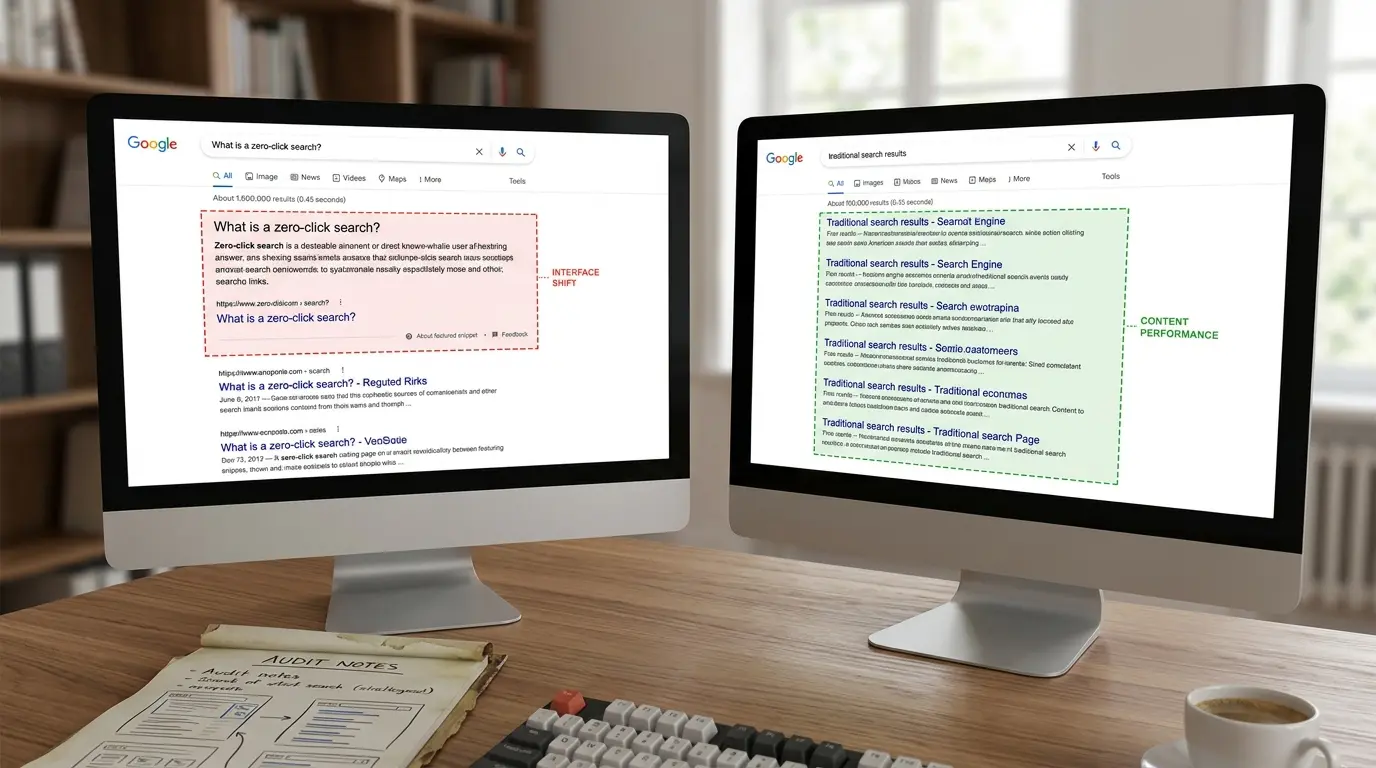
Website operators frequently observe a divergence between stable search impressions and declining organic click-through rates. When search engines introduce direct answer cards, generative summaries, or expanded knowledge panels, users often satisfy simple queries directly on the results page. In these scenarios, the underlying page content may still rank prominently and satisfy the search engine index, yet fail to receive downstream visits.
Attributing every traffic dip to editorial quality can lead teams to rewrite high-performing reference material unnecessarily. Before altering page copy, verify whether the target search queries trigger zero-click interface features. If the query pattern consists of brief definitions, unit conversions, or factual lookups, the traffic shift represents a search interface evolution rather than a failure of on-page substance.
For a deeper look into why machines parse text without referencing it, read why search engines read but do not cite content. why search engines read but do not cite content.
When lost visits indicate a genuine content deficiency
A decline in clicks points directly to a content issue when competing resources provide clearer direct answers, richer supporting context, or more authoritative evidence that answer engines prefer to cite. If an AI engine synthesizes responses from third-party sites while bypassing your material, evaluate whether your pages provide unambiguous assertions, clear structured summaries, and verified topical depth.
Vague commentary, outdated data, or unstructured narrative layouts often prevent automated systems from extracting clean citations. When the search intent requires nuanced analysis or multi-step execution, losing citations to alternative sources indicates that your editorial structure is not serving AI evaluation models effectively.
To examine how structured data impacts engine evaluation, read our schema markup evaluation. schema markup evaluation.
Technical accessibility and crawling barriers masquerading as content failure
Lost clicks frequently originate from technical access restrictions rather than poor writing. If an automated crawler encounters aggressive disallow directives in a robots.txt file, rate limiting, or client-side JavaScript rendering barriers, it cannot parse the updated content. In such cases, the page drops from citation visibility regardless of its editorial depth.
Audit server response codes, rendering pipelines, and crawler access logs before rewriting text. Confirm that answer engine user agents receive complete HTML responses and that essential page sections are not hidden behind paywalls, scripts, or bot-blocking firewalls.

To verify that automated agents can access your assets, review robots.txt audit guidelines. robots.txt audit guidelines.
The impact of entity ambiguity and schema markup on AI citations
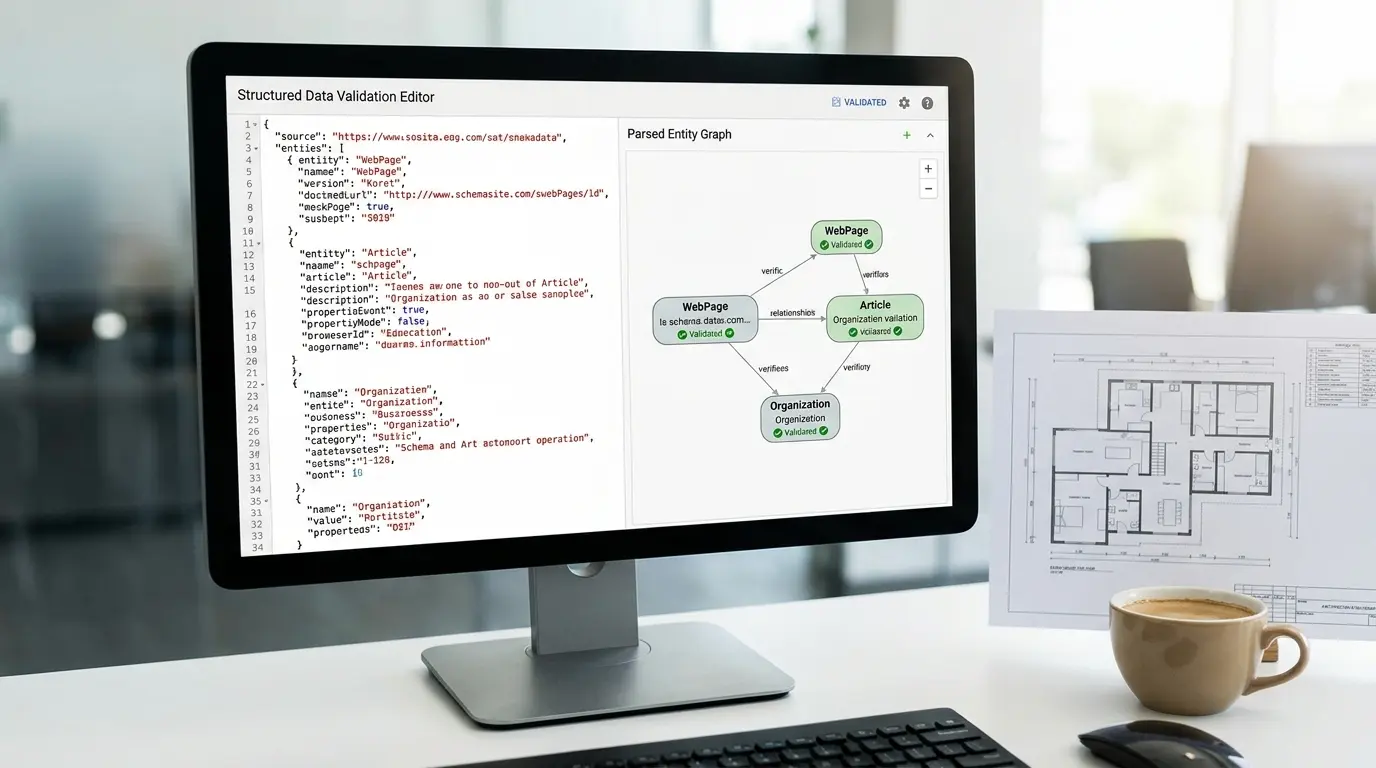
AI answer engines rely on semantic entity relationships to establish confidence before citing a domain. If a website publishes content without clear entity definitions, consistent organizational identifiers, or structured schema markup, search models may struggle to disambiguate the author, brand, or specific subject matter.
When an engine cannot verify that a page represents an authoritative entity on a given topic, it often selects alternative sources with clearer structured data. Auditing schema markup and topical entity clarity helps determine whether visibility loss stems from semantic confusion rather than editorial quality.
To improve machine understanding of your domain topics, study entity clarity principles. entity clarity principles.
Evaluating intent complexity and click potential
Not all search queries carry equal potential for website visits in an AI-driven search ecosystem. Informational queries with single-fact answers are structurally vulnerable to zero-click absorption. Conversely, complex workflows, interactive tools, primary research datasets, and operational decisions still require users to navigate to the source website.
Categorize your affected URLs by query intent complexity. If traffic loss is concentrated on shallow informational pages, shifting editorial focus toward in-depth, decision-oriented resources can establish more resilient visibility that warrants an intentional user click.
To pinpoint URLs capable of earning citations, explore identifying high-potential citation pages. identifying high-potential citation pages.
How YAS AI Visibility assists in zero-click diagnosis
YAS AI Visibility provides structured diagnostics to help technical operators inspect how AI answer engines access, understand, trust, and cite a domain. The platform evaluates crawl accessibility, structured data implementation, entity clarity, and cited-answer presence across target queries.
By separating technical crawling barriers and entity resolution issues from content quality gaps, the system helps teams avoid unnecessary content rewrites and prioritize evidence-led remediation tasks.
To explore diagnostic workflows for identifying SERP feature impacts, explore traffic loss audit solutions. traffic loss audit solutions.
Limitations and suitability
Zero-click diagnosis methodologies do not guarantee traffic recovery or search rankings. Search engine user interfaces and AI synthesis models evolve continuously, and specific traffic outcomes depend on competitive movement, query intent shifts, and platform-level algorithm updates.
Operators must verify local search console data, server access logs, and individual search engine results manually. Diagnostic audits provide structured evidence for decision-making but do not replace ongoing verification against current search engine policies and technical web standards.
Formulating an evidence-led traffic remediation plan
An effective recovery strategy begins with systematic isolation of the root cause rather than broad assumptions. Document whether impressions dropped alongside clicks, check indexation and crawl status, and review the exact SERP features rendered for core commercial queries.
Once technical barriers and layout-driven losses are identified, focus editorial improvements specifically on pages where AI engines seek comprehensive citation sources. This approach conserves editorial resources and establishes measurable milestones for visibility improvement.
| Diagnostic Scenario | Primary Root Cause | Key Indicator to Inspect | Recommended Verification Step |
|---|---|---|---|
| Stable impressions, declining CTR on single-fact queries | SERP layout / Zero-click answer display | Direct answer cards or AI overviews present in search results | Verify whether query intent can be satisfied without navigating to external sites |
| Declining impressions and zero citations across competitors | Technical accessibility or indexation block | Server logs, robots.txt directives, and search console crawl errors | Audit crawler status codes and rendered HTML output for AI user agents |
| Competitors cited in AI summaries while domain is omitted | Content structure or entity clarity deficit | Schema markup completeness and extractable direct answers on page | Compare page entity definitions and answer clarity against cited competitors |
| Broad traffic decline across complex workflow topics | Topical depth or outdated factual evidence | Content freshness, primary data references, and depth of analysis | Audit whether editorial material provides unique evidence and thorough execution steps |
Step-by-step diagnostic process for zero-click traffic shifts
- Pull search console performance data to compare impressions against clicks across target URLs.
- Inspect the current search engine results page layout for direct answer boxes and AI summaries.
- Review robots.txt files and server access logs to confirm AI crawlers can fetch the HTML content.
- Verify rendered HTML output to ensure crucial content is not dependent on unexecuted client-side scripts.
- Examine structured schema markup and entity references on affected pages for accuracy and consistency.
- Compare omitted pages against cited competitors to evaluate answer precision and evidence quality.
- Prioritize remediation tasks between technical access fixes, entity updates, and editorial expansions.
Diagnosing traffic changes requires separating search interface absorption from technical crawling obstacles and genuine content gaps.
FAQ
Does a drop in organic click-through rate always indicate poor content quality?
No. A drop in click-through rate often occurs when search engine results pages introduce instant answers or generative overviews that satisfy informational queries directly on the results page.
How can technical operators verify if an AI crawler is blocked from accessing a page?
Operators can inspect server access logs for AI crawler user agents, check robots.txt disallow rules, and test whether full HTML content is returned without client-side rendering failures.
What role does schema markup play in AI search citations?
Structured schema markup helps search engines and AI models accurately identify page entities, author credentials, and topical context, reducing ambiguity during citation selection.
Can every lost click be recovered through content optimization?
No. Simple factual queries that are directly answered within search interface widgets rarely return to previous click volumes, making it necessary to focus on complex, decision-driven topics.
What is the first step in diagnosing zero-click traffic loss?
The first step is checking whether search impressions remained stable while clicks declined, followed by inspecting the actual search results page layout for newly introduced answer features.