What an AI Visibility Audit Can Prove and What It Cannot
Understand the scientific boundaries of AI search visibility audits. Learn what technical evidence can be proven and what real-time engine behaviors remain unpredictable.

An AI visibility audit can prove your technical accessibility, schema compliance, and entity clarity, but it cannot guarantee real-time rankings or predict exact generative engine outputs. By establishing a clear boundary between verifiable technical readiness and unpredictable algorithmic synthesis, website operators can make evidence-backed optimization decisions rather than chasing volatile search trends.

The evidence boundary in AI search
The emergence of AI answer engines and retrieval-augmented generation (RAG) systems has introduced a shift in digital visibility. Traditional search optimization relied on tracking stable keyword positions on standardized search engine results pages. In contrast, modern AI search engines synthesize answers dynamically, drawing information from diverse web sources in real time. This dynamic synthesis creates a complex environment for website operators who must understand how their content is processed. To navigate this landscape, operators require a rigorous, evidence-backed diagnostic approach that separates verifiable technical factors from the probabilistic behaviors of generative models.
An independent GEO and AI-search visibility audit serves as this diagnostic framework. However, the utility of such an audit depends entirely on recognizing its scientific boundaries. In any digital ecosystem, we must distinguish between deterministic elements and probabilistic elements. Deterministic elements are those under the direct control of the website operator, such as server configurations, crawl directives, and structured data markup. Probabilistic elements, on the other hand, include the real-time decisions made by a neural network when generating a response to a specific, unique user query.
By establishing a clear evidence boundary, website operators can avoid the unproductive cycle of chasing volatile, unpredictable search trends. Instead, they can focus their engineering and content resources on building a robust, accessible foundation that AI engines can easily crawl, parse, and trust. This article defines exactly what an independent audit can prove with empirical evidence and what must remain classified as algorithmic uncertainty, helping operators make informed, evidence-backed optimization decisions.
What an audit can prove with absolute certainty
Technical accessibility is the foundational layer that an audit can verify with absolute certainty. If an AI crawler cannot access your website, your content cannot be integrated into generative answers. An audit systematically analyzes your robots.txt directives, server response codes, and HTTP headers to confirm whether specific user-agents are permitted to scan your pages. This provides a binary, verifiable proof of access, ensuring that no artificial barriers prevent AI engines from discovering your digital assets.
Beyond basic crawl rules, an audit proves the presence, validity, and structure of your entity definitions. By analyzing your structured data and schema markup against established specifications, the audit verifies whether your brand, products, and articles are represented clearly. This structured layer is vital because it allows AI models to parse factual relationships without relying solely on complex natural language processing. The audit provides empirical proof of whether your schema is syntactically correct and semantically aligned with your core content.
Finally, an audit can prove citation readiness by analyzing your content formatting and structural patterns. Retrieval-augmented generation systems typically extract short, factual text segments to support their synthesized answers. An audit evaluates whether your pages contain clear headings, concise direct answers, and structured lists that match the retrieval patterns used by modern search engines. This analysis provides concrete evidence of how well your content is prepared for extraction and citation.

What an audit can never guarantee
While an audit provides invaluable technical diagnostics, it cannot guarantee specific ranking positions or real-time visibility. Generative answers are highly dynamic, personalized, and context-dependent. Two users entering the exact same prompt may receive different synthesized answers based on their search history, location, and the active model's internal parameters. Therefore, claiming a guaranteed citation or a fixed position in an AI-generated response is scientifically impossible and misrepresents how generative models function.
An audit also cannot predict the impact of future model updates or algorithmic shifts. AI engine providers constantly adjust their underlying neural network weights, retrieval algorithms, and safety filters. A website that enjoys high visibility today might experience a sudden change tomorrow due to a platform-wide update, even if the website's technical infrastructure remains completely unchanged. The audit can prove your technical readiness, but it cannot control or predict the evolution of third-party machine learning models.
Lastly, an audit cannot guarantee direct traffic conversion or user engagement. Being cited as a source in an AI answer is an important milestone, but whether a user chooses to click the citation link depends on user behavior, interface design, and the completeness of the synthesized answer. An audit can prove that your content is highly citable and technically accessible, but it cannot force users to leave the AI interface to visit your website.
Limitations and suitability
An independent AI visibility audit is highly suitable for organizations that manage large volumes of structured data, such as enterprise websites, content publishers, and e-commerce platforms. These organizations benefit from verifying that their product catalogs and editorial content are fully accessible and understandable to AI crawlers. Conversely, an audit is less suitable for hyper-local businesses with minimal digital footprints or websites that gate all their valuable content behind strict paywalls, as these setups inherently restrict the access needed for deep analysis.
The primary limitation of any audit is its point-in-time nature. Because AI engines utilize a combination of cached training data and real-time web search APIs, an audit reflects your technical readiness at the exact moment of analysis. It cannot account for temporary server outages, transient network issues, or real-time API rate limits that might occur during an actual user query. It provides a diagnostic snapshot rather than a continuous, real-time guarantee of performance.
Furthermore, verification and remediation duties ultimately remain with the website operator. While an independent diagnostic tool can pinpoint technical bottlenecks, missing schemas, or crawl blocks, it cannot automatically repair them. Implementing the necessary fixes requires manual oversight, engineering resources, and a commitment to maintaining clean technical standards over time. The audit serves as a roadmap, but the operator must execute the journey.
Evaluating the technical accessibility layer
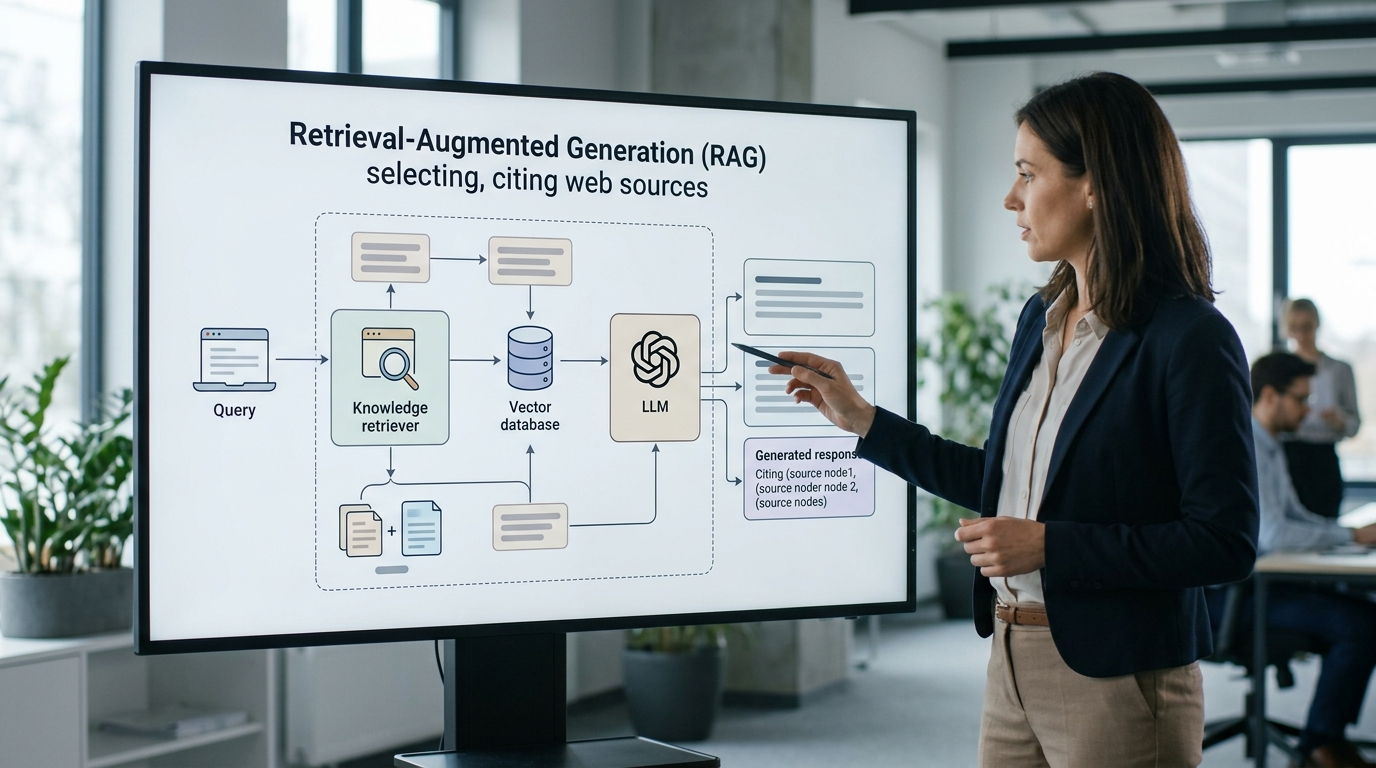
Evaluating the technical accessibility layer requires a systematic review of how search bots interact with your server. AI scrapers do not behave exactly like traditional search crawlers; they often have different crawl rates, timeout thresholds, and rendering capabilities. An audit measures how your server responds to these specific user-agents under simulated conditions, identifying potential bottlenecks that could prevent successful content retrieval.
One common issue identified during audits is the failure of client-side JavaScript rendering. If your website relies heavily on complex client-side frameworks to display content, some AI scrapers may only read the initial empty HTML shell. An audit proves whether your critical content is delivered server-side or if it requires client-side execution that might time out during a crawl, ensuring that your valuable information is immediately readable.
By resolving these technical accessibility issues, you establish a solid foundation. If the crawlability of your site is verified, you eliminate the most common reason why high-quality content fails to appear in generative search results. This makes technical remediation the logical starting point for any optimization strategy, as it ensures that your content is physically available for ingestion by AI engines.
Analyzing entity clarity and semantic structure
Analyzing entity clarity and semantic structure shifts the focus from raw crawlability to comprehension. AI engines do not merely match keywords; they build semantic maps of the web. An audit evaluates how effectively your website defines its core entities and links them to established external databases or official registries. This structured approach helps engines understand the exact context of your content, reducing the risk of misinterpretation.
When your brand entity is clearly defined, generative models can associate your content with specific topics with much higher confidence. This reduces the likelihood of the model attributing your original research or product features to a competitor. The audit checks for consistency in entity naming, address details, and product identifiers across your entire domain, ensuring that your digital footprint is coherent and unambiguous.
A clean semantic structure also directly influences how models handle citations. If an engine can easily trace a factual claim back to a verified entity on your website, it is far more likely to generate a direct citation link. This structured approach turns your website into a trusted node in the broader web of data, making it easier for AI engines to cite your content as an authoritative source.
How an independent visibility product helps operators navigate uncertainty
Navigating the complexities of the AI search landscape requires a shift from guesswork to empirical analysis. An independent GEO and AI-search visibility product provides website operators with the precise diagnostic data needed to make informed technical and editorial decisions. By focusing on verifiable evidence, our platform helps you cut through the noise of generic search advice and focus on what truly matters for AI accessibility.
Our independent audit platform analyzes your technical accessibility, schema integrity, and semantic formatting against the requirements of modern retrieval-augmented generation (RAG) systems. This analysis gives your development and content teams a clear, prioritized checklist of issues to resolve, ensuring your optimization efforts are directed toward measurable improvements in how engines access, understand, trust, and cite your website.
While no tool can control the volatile algorithms of third-party AI providers, an independent visibility product empowers you to control your technical readiness. By proving what can be proven and highlighting areas of vulnerability, we help you build a resilient digital presence that is prepared for the future of search. This evidence-backed approach ensures that your website remains highly accessible, understandable, and trusted by modern AI answer engines.
| Audit Dimension | What We Can Prove | What Remains Probabilistic | Actionable Remediation |
|---|---|---|---|
| Technical Crawlability | Whether AI bots are blocked by robots.txt or headers | How frequently the bot will choose to re-crawl | Update robots.txt and server configurations |
| Entity Definition | Presence of schema markup and entity alignment | Whether the model synthesizes your entity correctly | Implement clean structured data and resolve entity conflicts |
| Citation Readiness | Presence of clear factual claims and structured formatting | Whether the model selects your site for a specific prompt | Structure content with direct answers and clear headers |
| Rendering Performance | If content is readable without client-side execution | The exact timeout limits of individual AI scrapers | Optimize server-side rendering for critical content |
| Content Quality | Readability scores and semantic formatting | The user intent classification of a real-time query | Refine editorial guidelines to focus on structured data |
Steps to Validate Your AI Search Readiness
- Audit your robots.txt file to ensure user-agents like GPTBot and ClaudeBot are not unintentionally blocked.
- Validate your JSON-LD schema markup using structured data testing tools to confirm entity clarity.
- Analyze server logs to verify if AI crawler IP ranges are successfully accessing your resource paths.
- Structure your editorial content with clear headings and direct, factual answers to facilitate RAG extraction.
- Monitor your brand mentions across major LLM interfaces to establish a baseline of current visibility.
Do not mistake algorithmic volatility for technical failure. Focus on proving your site is accessible, structured, and authoritative, and let the models handle the synthesis.
FAQ
Can an AI visibility audit guarantee my site will be cited by generative engines?
No, an audit cannot guarantee citations because generative engine outputs are probabilistic and depend on the user's specific prompt. However, it can prove whether your site is technically accessible and structured in a way that makes citation highly probable.
How often should we audit our website for AI search visibility?
We recommend conducting an audit periodically or after any major site migration, content restructure, or update to your robots.txt file to ensure no technical blocks have been introduced.
What is the difference between traditional SEO audits and AI visibility audits?
Traditional SEO audits focus on keyword rankings, backlink profiles, and page speed for standard search engines. AI visibility audits focus on crawler accessibility, entity clarity, schema validation, and citation readiness for AI answer engines.
Why does my site appear in some AI answers but not others?
Generative engines synthesize answers in real-time based on prompt context, model parameters, and active search indexes. This inherent variability means visibility can fluctuate even for identical queries.
Can blocking AI crawlers protect my content without harming my SEO?
Yes, you can block specific AI scrapers while allowing traditional search crawlers. However, this will prevent those specific AI engines from accessing, understanding, and citing your content in their generative answers.
What role does schema markup play in AI search visibility?
Schema markup provides structured data that helps AI engines understand the exact relationships between your brand, products, and content, reducing the risk of misinterpretation.